
Cell and tissue cultures are a special type of experiments. Special conditions are required to conduct them. When designing an in vitro laboratory, the following aspects must be taken into account: operator safety, material protection and environmental contamination prevention.
The first question to ask yourself before designing an in vitro laboratory is: what organisms, or cells of which organisms, do we intend to cultivate? The requirements for the conditions that must be ensured when working with particular types of organisms are strictly defined by the BSL classification. BSL stands for ‘Biosafety Level’. There are 4 BSL levels. An overview of all biosafety levels can be found here. In the following article, we will focus on BSL-2, as it is sufficient for most laboratories.
Where to start? How do you plan the organisation of an IVF laboratory so that it meets certain requirements?
The most important thing to start with is to determine the type of organisms we will be cultivating. A biosafety level should be specified for each organism. Working conditions should be adapted to the organism with the highest biosafety level. This means that if samples containing, for example, Mycobacterium tuberculosis may appear in our laboratory, it should meet the requirements for BSL-3, even though we work with organisms from lower levels on a daily basis.
Most often, research laboratories work with organisms up to BSL-2. Examples of such organisms include HIV, as well as hepatitis A, B and C viruses. They also include Plasmodium falciparum and Toxoplasma gondii, and even prions such as vCJD, which, however, are often studied in higher-class laboratories. Organisms classified as BSL-2 pose a moderate risk to both the operator and the environment.
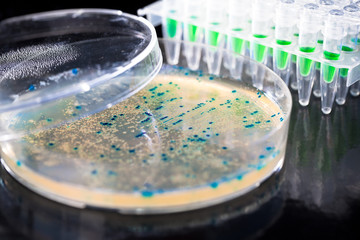
There are fewer BSL-3 and BSL-4 compliant centres, but these are the ones to which samples containing material above BSL-2 are referred.
Selection of a facility
When selecting a room, it is worth considering its exposure to sunlight. If possible, north-facing rooms are ideal. Otherwise, blackout films or other systems that limit sunlight entering the laboratory should be used. This will make it easier to control the temperature in the room, prevent excessive heating of equipment and overload the ventilation system.
Access to the laboratory
The room should have self-closing doors. These act as a mechanical barrier, reducing the risk of infectious material accidentally escaping from the laboratory. Although access restrictions and staff flow monitoring are not required, employees must be trained before starting work. It should also be remembered that the presence of untrained persons in the laboratory poses a threat to their health and increases the risk of material contamination and environmental pollution.
Equipment
The procedures require laboratory staff to maintain strict hygiene. A sink and hand disinfection station should be located near the exit. An eye wash station should also be installed.
Sterility
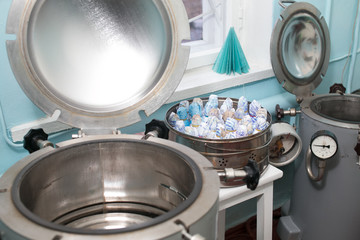
Disposable laboratory accessories used when working with infectious material and all materials that come into contact with it must be placed in special, tightly sealed containers and disposed of by a specialised company. Reusable accessories must be disinfected in an autoclave. It is required that the autoclave be located inside the in vitro laboratory. To maintain sterility, all surfaces must be disinfected regularly. They must therefore be resistant to disinfectants. This should be taken into account when designing the room.
Laminar flow cabinet
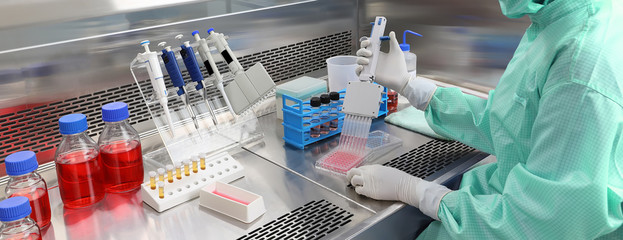
A minimum class II laminar flow cabinet is an essential piece of equipment in a BSL-2 in vitro laboratory. All procedures that may generate aerosols or splashes must be performed in this cabinet. The purpose of this class of cabinet is to ensure the safety of both the operator and the material against contamination. It also acts as a safety barrier for the surroundings and the environment. The necessary equipment for this purpose includes forced air circulation provided by a fan/fans and HEPA filters. In addition, the operator is separated from the material by a sliding glass panel.

Personal protective gear
Standard personal protective equipment such as a protective apron and disposable gloves are required. When working with the possibility of splashes or aerosols, in addition to using a laminar flow cabinet, respiratory protection in the form of a protective mask and safety goggles should be used.
Above all, attentiveness
Regardless of the equipment and precautions taken, it is essential that staff strictly follow procedures and remain cautious. It is important to remember that we are responsible not only for our own safety, but also for the safety of other staff and the environment.